Click to enlarge
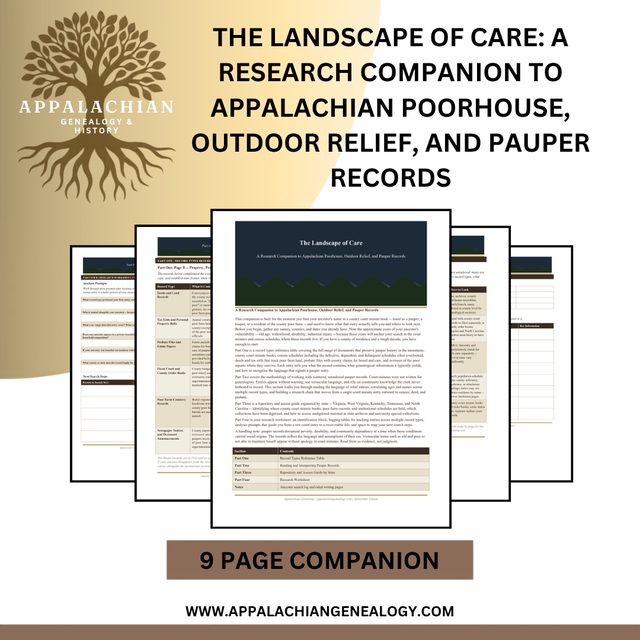
9 page PDF research guide includes:
Guide for Old and Poor: What County Court Minutes Reveal About Appalachia's Forgotten Poor
The entry reads "old and pore" in the margin of a court minute book, between a road appointment and an orphan binding. It is not a moral judgment; it is the vernacular the clerk reached for when the county authorized payment to a neighbor for keeping your ancestor through the winter. Court minute books were not written for genealogists, and pauper entries appear without warning, indexed under nothing, relying on community knowledge the clerk never bothered to write down. Knowing what that entry means and where it leads is what moves you from a single margin note toward a recoverable life.
What's Inside
- Primary record types reference table covering county court minute books, overseer of the poor reports, defective and dependent census schedules, poor farm census listings, and pauper indenture and apprenticeship records, with genealogical yield and where to look for each
- Property, probate, and institutional records table covering deeds and land records, tax lists, probate files and estate papers, fiscal court and county order books, poor farm cemetery records, and newspaper notices
- Language and interpretation guide covering vernacular pauper entry types, what each signals genealogically, and how to use it, including entries for outdoor relief, institutional admission, removal to another county, and census pauper designations
- Correlation strategy for working across records when ages and names shift between sources
- Repository and access guide organized by state for Virginia, West Virginia, Kentucky, Tennessee, and North Carolina
- Research worksheet with identification block, record entry log, and analysis prompts for moving from a raw court entry outward
- Notes pages
Paid Subscribers Only
Get Your Copy