Click to enlarge
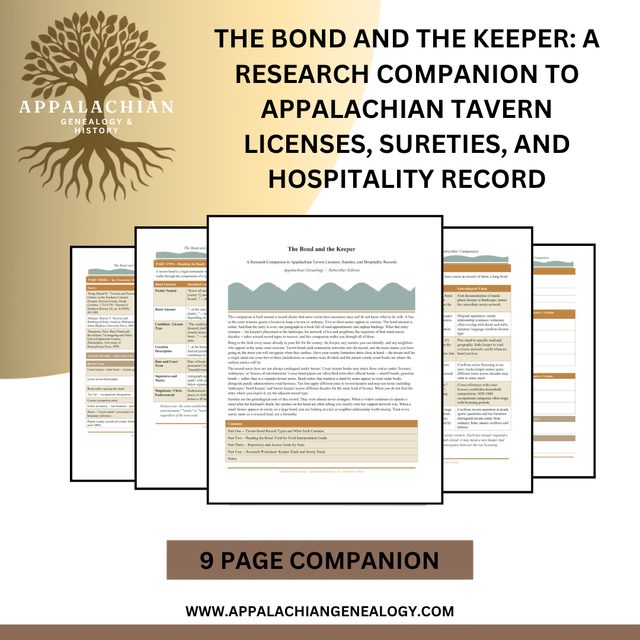
9 page PDF research guide includes:
Guide for The Man Who Kept the Ordinary
The court minute entry is one paragraph between a road appointment and an orphan binding. A license granted to keep a tavern. Two or three names as sureties. A bond amount noted. Tavern bonds are not business records; they are relationship records. When a widow continued operating a stand after her husband's death, the sureties on her bond were often telling you exactly who her support network was. When a small farmer appeared on a large bond, you are looking at a kin or neighbor relationship worth tracing into the land records and tax lists where it will surface again.
What's Inside
- Tavern bond record types table covering court minute and order book entries, loose bond papers, road orders, tax lists, census occupation entries, and estate inventories, with where each is found, what the entry contains, and its genealogical value
- Field-by-field bond interpretation guide covering parties named, bond amount, condition and license type, location description, date and court term, signatures and marks, and magistrate endorsement
- Dialect note covering the full range of terms used for the same institution across records and decades: ordinary, tavern, inn, public house, house of entertainment, stand, and tavern stand
- Repository and access guide by state for North Carolina, Virginia, South Carolina, Tennessee, Kentucky, and West Virginia
- Key secondary sources on Appalachian tavern culture and their research relevance
- Search checklist for eight record types including court minutes, loose bond papers, road orders, tax lists, census entries, estate inventories, deed references, and parent county records
- Keeper track worksheet with tavern license log covering court term, license status, bond amount, and surety names, plus road orders and deed references section
- Surety track worksheet with surety identification and relationship log and surety network cross-reference table
- Notes pages
Paid Subscribers Only
Get Your Copy