Click to enlarge
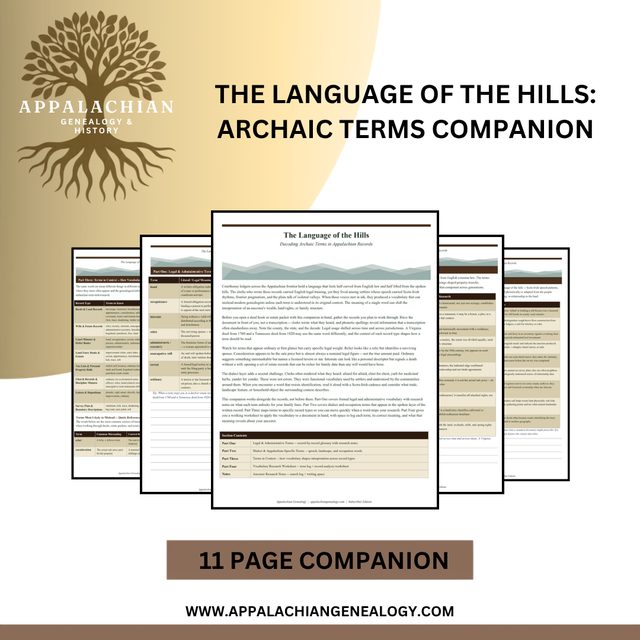
11 page PDF research guide includes:
Guide for The Language of the Hills: Archaic Terms
The word "relict" in an 1810 deed does not mean relic. It identifies the surviving spouse, and a researcher who reads past it misses a confirmed death date and a named widow in the same sentence. Courthouse clerks across the Appalachian frontier worked in two vocabularies at once: the formal Latin-rooted language of English common law and the spoken Scots-Irish vernacular of the communities they recorded. "Consideration" looks like a sale price but is almost always a nominal legal figure bearing no relation to what actually changed hands. "Ordinary" names a licensed tavern. "Intestate" signals a death without a will and opens a set of estate records that can be richer for family data than any will would have been. The dialect layer compounds the difficulty: clerks wrote what they heard, so "yarb" for medicinal herbs, "puncheon" for a split-log floor, and "froe" for a wood-splitting tool appear in estate inventories without explanation, because everyone in that county already knew what they meant. This companion gives you the working reference for both layers, tied directly to the record types where each term appears and the research questions each correct reading opens.
What's Inside
- Legal and administrative terms glossary covering messuage, tenement, toft, moiety, indenture, consideration, hereditament, improvement, appurtenance, bond, recognizance, intestate, relict, administratrix, executrix, nuncupative will, caveat, and ordinary, with literal meaning and research value for each
- Dialect and Appalachian-specific terms glossary covering stilled, puncheon, maul, froe, entry taker, chainman, mark and brand, lick, trace, and additional frontier occupation and landscape terms, with where each appears and research notes for each
- Terms-in-context guide mapping vocabulary to specific record types so unfamiliar words can be identified quickly while working through documents
- Common misreadings reference table showing the term as it appears, the incorrect common reading, and the correct meaning
- Ancestor and document identification worksheet
- Term decoder log for recording each unfamiliar term, its correct meaning, and how that meaning changes the interpretation of the record
- Research findings log for connecting decoded terms to follow-up record searches
- Notes pages